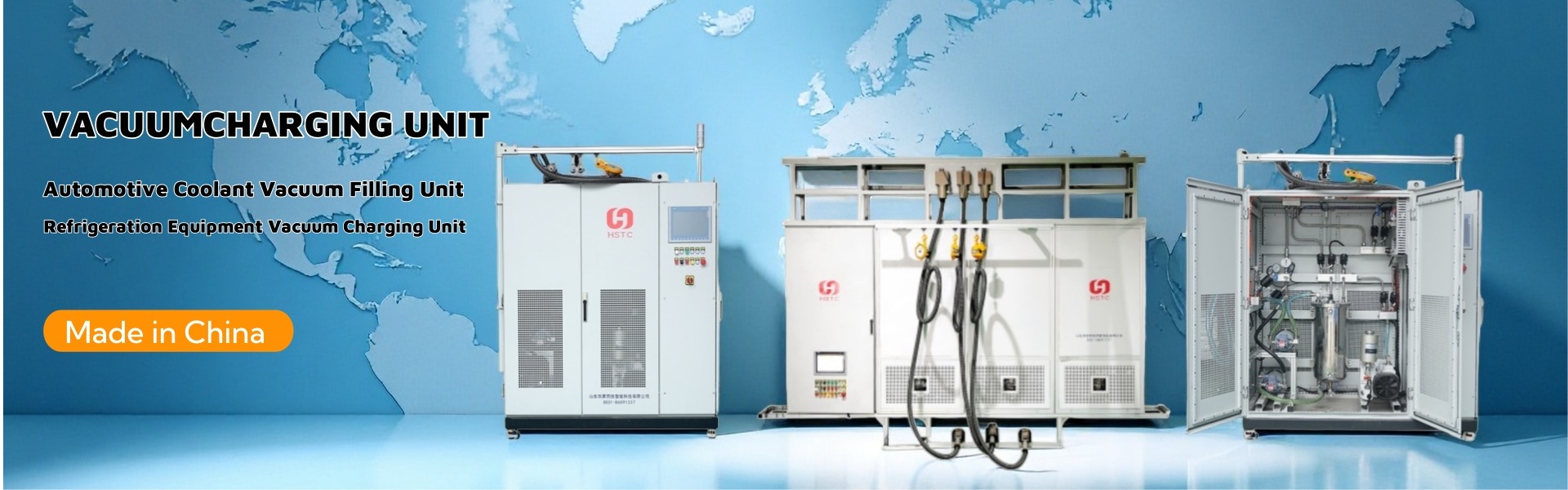
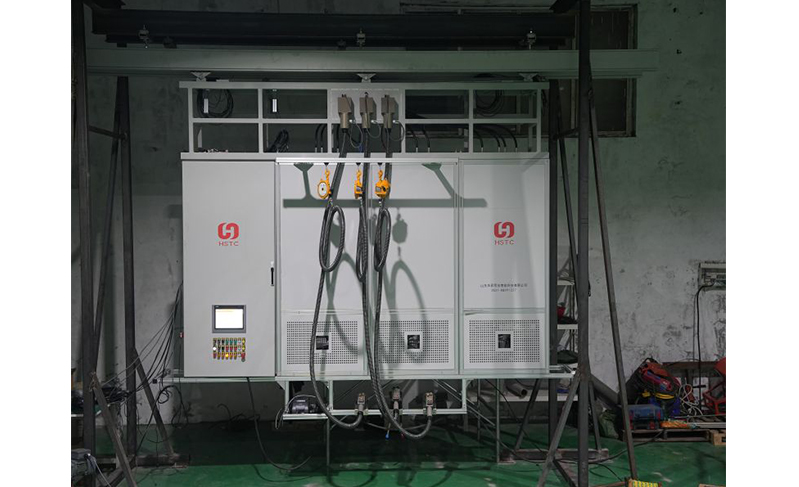
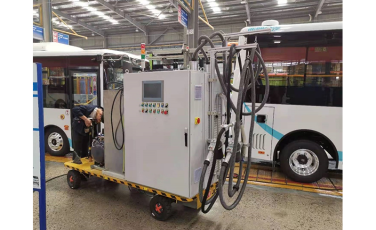
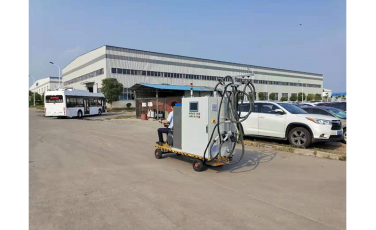
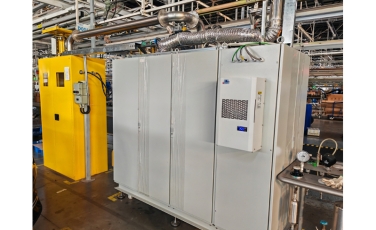
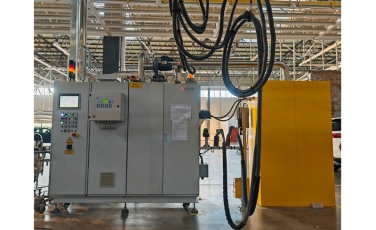
The coolant charging machine is a vacuum-assisted filling device specifically engineered for automotive engine cooling systems (including components such as radiator tanks, water pipes, engine jackets, and water pumps). Its core principle involves evacuating air from the system through vacuum extraction, then precisely injecting coolant using pressure differentials to prevent "airlock" (where air hinders coolant circulation and causes engine overheating). The workflow consists of four critical stages, each designed around two key objectives: thorough air removal and efficient coolant filling.
- Equipment and cooling system docking: the special joint of the filling machine (adapted to the vehicle's cooling system filling port, such as radiator cap interface, secondary water bottle interface) is sealed connected with the target system to ensure that the joint is fit without leakage (some models need to use special adapter to avoid gas leakage caused by mismatch of interface size).
- Device self-test:
- Check the coolant level in the storage tank (it should be higher than the lowest scale to avoid air inhalation during filling);
- Confirm that the oil level of the vacuum pump and the pipeline connection are intact (no bending or crack);
- The control system is initialized (set the target vacuum degree, filling amount and other parameters, such as preset vacuum degree-0.09MPa and filling amount 5L according to the vehicle type).
Start the vacuum pump: The control system drives the vacuum pump to work and evacuates the cooling system through the pipeline. The vacuum degree is gradually increased, usually set at-0.08MPa to-0.095MPa (absolute pressure about 0.01-0.02MPa).
- Principle: In a vacuum environment, the air in the cooling system (including bubbles left in the pipe bend and dead end of the water jacket) will be "sucked away"; at the same time, a small amount of water vapor in the system will have its boiling point reduced under low pressure, and will be evaporated and discharged with the air (to avoid the coolant mixing with water to affect the boiling point).
保压检测:达到目标真空度后,真空泵停止工作,进入保压阶段(通常 30-60 秒)。
- 目的:验证冷却系统是否密封。若保压期间真空度下降≤0.005MPa,说明系统无泄漏(允许微小泄漏,因冷却液加注后可自行填充);若下降过快(如>0.01MPa),则判定系统泄漏(如水管接头松动、水箱裂纹),需停机排查后重新抽真空。
Switching the filling mode: after passing the pressure holding test, the control system automatically closes the vacuum valve and opens the filling valve. The coolant in the storage tank flows to the cooling system through the pipeline.
- Power source: The negative pressure (vacuum) in the cooling system creates a pressure differential with the atmospheric pressure (or slight positive pressure) in the reservoir, allowing coolant to flow into the system under "suction." Some equipment applies 0.1-0.2MPa low-pressure air (compressed air) to the top of the reservoir to accelerate refilling, particularly for large-capacity systems like truck cooling systems.
Quantitative control: the filling amount is monitored in real time through flowmeter or level sensor, and the filling valve is automatically closed after reaching the preset value (such as 5L).
- Features: The coolant has low viscosity (about 5-10cSt at 20℃) and good fluidity, so it can fill the system without high pressure; and the cooling system is designed with an "expansion kettle", allowing a small amount of excess injection (the excess liquid can be returned to the kettle to avoid excessive system pressure).
- Pressure relief: After filling, the system opens the pressure relief valve to balance the pressure in the cooling system with the outside (to avoid direct connection of the connector causing liquid spatter).
- Separation and inspection: Disconnect the filling joint and observe whether there is leakage in the cooling system interface; some models need to start the engine idling (5-10 minutes) to allow coolant circulation and discharge residual air (through the exhaust hole of the expansion water bottle), at this time, a small amount of coolant can be added to the standard level.
The working principle of the coolant filling machine is optimized around two characteristics of the cooling system:
- Large system volume and complex structure: sufficient vacuum and pressure holding tests are required to ensure that air is completely discharged from complex pipelines (such as engine water jacket);
- Coolant does not absorb moisture and allows slight exposure to air: there is no need to seal the reservoir as strictly as a brake fluid filling machine, and the filling process is more tolerant of air exposure, focusing more on "efficient filling".
The ultimate purpose is to "first evacuate air in vacuum, and then add pressure difference" to ensure that the coolant fills every part of the cooling system, avoid gas blockage affecting heat dissipation efficiency, and ensure the normal operation of the engine.